






































When was the last time you truly felt seen?
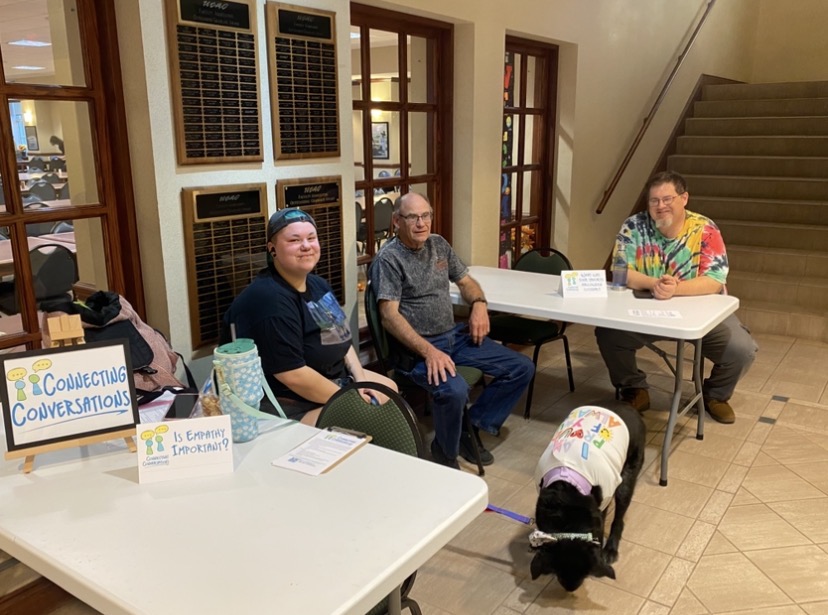
Connecting Conversations is a non-university affiliated group of individuals who want to bring back intentional conversations. Their mission all started with learning about the loneliness epidemic of Generation Z.
The members of Connecting Conversations are based out of Saint Luke’s Episcopal Church in Chickasha. However, they want to inform students that this group does not have a religious component and is open to all students. The idea for the group is to make the world a better place, one conversation at a time.
“Connecting Conversations started as a response to the epidemic of loneliness, and it came about because of Katie Davis,” said Suzanne Jackson, a member of Connecting Conversations. “Saint Luke’s had a collaborative relationship with the USAO Performing Arts Department, which is how we knew Katie Davis.”
Jackson further explained that the idea for the group came about from a story Davis heard on NPR. It was an experiment on the London transit system called “Chatty Cabins.” Individuals were offered a hot drink and a free ticket, so long as they agreed to chat with other passengers on the train. This experiment helped many friendships to form, and people even began to look forward to boarding the trains. Jackson, along with fellow members of the group, wanted to create something similar on campus.
Davis explained that much of the inspiration for the group came from a book titled “Six Conversations” by Heather Holleman, an academic from Pennsylvania State University.
“One of the things that struck me was following some of her guidelines for what you talk about when you have these conversations. It connected me back to some of the data in the Surgeon General’s report, which is you might be the only meaningful conversation someone has for seven to 10 days at a time,” Davis said. “One in four adults reports they don’t have a meaningful conversation more than once or twice a month, if that.”
She highlights that being someone who invests in another person, and helping them to feel seen, is one of the more influential parts of Holleman’s work that interested her.
“I didn’t go into it with the idea of “let’s create a group,” kind of like what they’re doing with their group as secondary, but they did invite me to be the keynote speaker in September at their Episcopal Women’s Conference,” Davis said.
There she discussed the loneliness epidemic and the importance of meaningful conversations.
Ashlin Tryczak, another member of Connecting Conversations and USAO alumna, details her own personal experience in working to have more meaningful conversations.
“Personally, I do this in my workplace, I do this at church, and I do this at home. It’s improved my relationships among my family, just being able to talk more openly and acceptingly,” Tryczak said.
She further explained that she likes learning about other people. For example, she did not know that it was unlucky to rename a horse. She believes it is special to share and learn about everyone’s own unique experiences.
When having conversations with others, the group uses the method highlighted in Holleman’s book. They want to help others talk about what they need to talk about utilizing the six points of conversation: physical, emotional, volitional (decision-making), social, spiritual, and cognitive.
“Essentially, the idea is if you start a conversation with someone, you go through [the topics] until that’s the thing they need to talk about, whether they know it or not. People have a need to be heard, seen, and understood,” said John Moroney, member of Connecting Conversations.
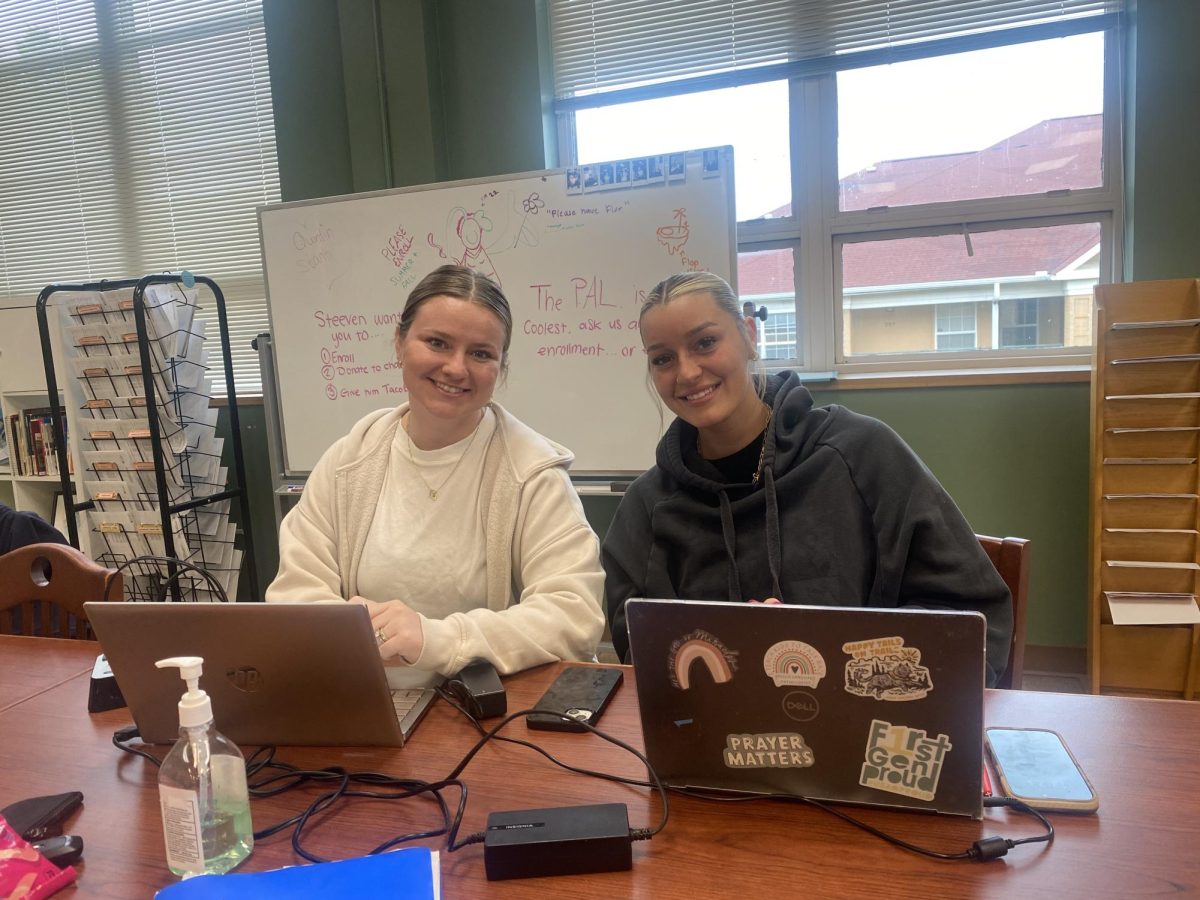
The group visits campus on the third Thursday of each month and sets up in the Student Center just outside the dining hall during dinnertime.
Whitley Brown is a third-year communication major at the University of Science and Arts of Oklahoma.