


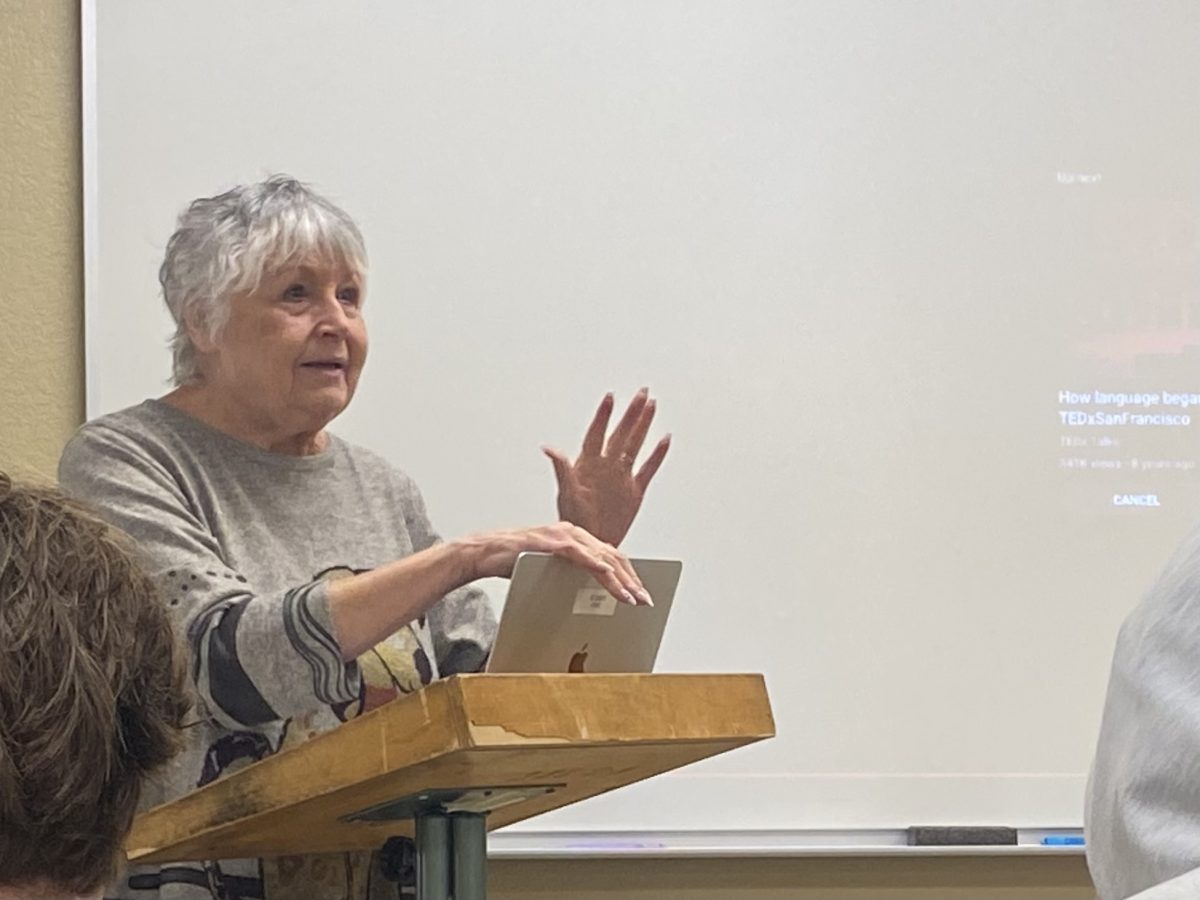







































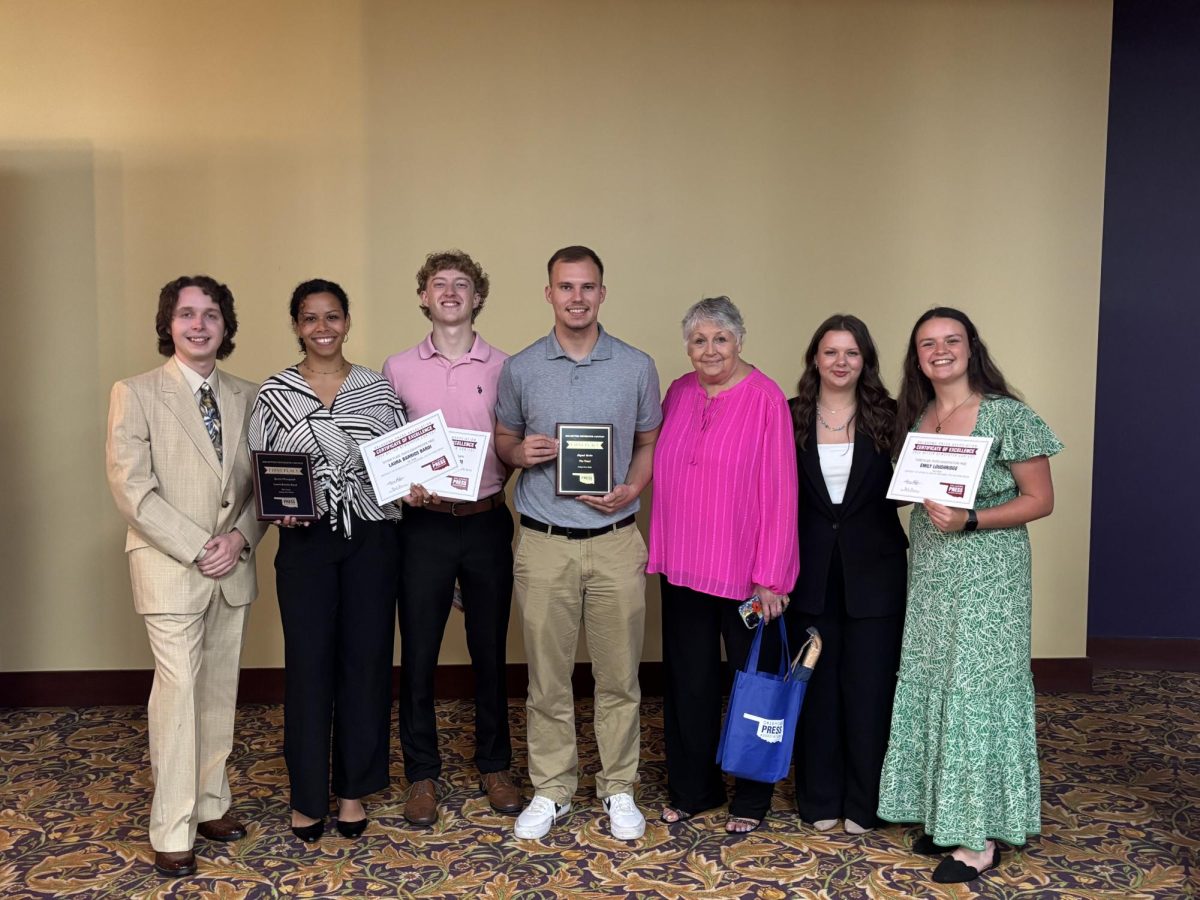


Tensions between students and university administration circled the air on the evening of Monday, September 14, as USAO President Dr. Kayla Hale led a Q&A at a Student Government Association (SGA) Town Hall.
The chief goal of the SGA Town Hall was to provide a space for students to ask Hale questions regarding pieces of policy passed at Thursday’s Board of Regents Meeting. While the policies passed unanimously, the main topics of discussion were as follows, according to a presentation by Mason Alldredge, SGA President:
- Item 17: 90-Hour Degree Program. This policy introduces a 90-hour Bachelor of Applied Science in Management program, focusing on Business Administration. This will be piloted for one year, after which it will be put under review to decide if the university will keep it as a program.
- Item 21: Amendment to the Faculty Handbook. This changes “Curriculum Development Committee” to “Academic Offerings and Innovation Committee.” This committee will make and review decisions regarding new academic programs, academic program modifications, curriculum revisions, etc. It is comprised of one dean, the Director of Nash Library, the Director of Creative Engagement, two faculty representatives, the Executive Director of Professional Studies, the Director of Institutional Assessment, the Registrar, and the Executive Director of Institutional Research.
- Item 22: Academic Council Operating Procedures. These procedures were built specifically for the Academic Offerings and Innovations Committee.
- Item 23: Amendment to Faculty Handbook. This updates class sizes and Faculty Load. It defines a standard faculty workload as 12 hours per term, with overload not guaranteed and may not exceed two courses per semester. This policy requires approval by Mackenna Garrison, Vice President of Academic Affairs for classes with less than 10 students. If the class is approved, then the professor teaching the course will receive the adjunct pay rate of $225 per student per semester.
- Item 24: Amendment to the Faculty Handbook. This policy concerns academic tenure, with professors hired after July 1, 2026, being ineligible for tenure. However, they will have a renewable appointment based on an annual review in compliance with state requirements. This policy was passed in accordance with Governor Kevin Stitt’s Executive Order 2026-06.
Hale addressed concerns regarding the Board of Regents Meeting that was held Thursday, September 10. Mason Alldredge, SGA President; Jeanette Loutsch, Faculty Association President (Zach Simpson attended in place of Loutsch); and Whitney Palesano, Director of Alumni Relations were on the agenda, as all had reports listed in the meeting packet.
“A lot of people are upset that Mason wasn’t given an opportunity to talk, and Dr. Zach Simpson wasn’t given an opportunity to talk. So, there are rules, very strict rules, governing open meetings in Oklahoma,” Hale said. “It is illegal to discuss anything that is not on the agenda. Mason did not ask to give remarks, and neither did Dr. Simpson.”
Alldredge clarified that the SGA submits a written report, and that his name appeared on the agenda so that the regents can acknowledge his report and ask questions if they choose to do so.
In Monday’s Town Hall meeting, regarding Item 23, Hale believes small classes not required for graduation must be defendable.
“I’ve seen a lot of things like I’m getting rid of every small class. That is not true. It is not true,” Hale said. “There will be some small classes that are perhaps elective that are not specific to your major, that will have to be defended.”
Hale also addressed issues of classes in the same section taught at the same time. She believes it’s not beneficial to the students, as it presents more challenges in scheduling.
“When it comes to our music classes, there are a tremendous amount of personal lessons, which I appreciate, but there’s also an opportunity to think about how we’re offering those classes in a different way,” Hale said.
Concerns regarding Hale’s previous employment at Tulsa University (TU) were addressed at Monday’s meeting as well. According to a question presented by Leigha VanOrsdol, senior computer science major, TU implemented a policy called True Commitment in 2019. VanOrsdol noted similarities between True Commitment and the policy change that was passed at Thursday’s Regents meeting, focusing on workforce readiness and class sizes.
“From 2018 to 2021, before to after the implementation, TU’s national rank dropped roughly 64%, from 87 in the nation to 143. In 2021, the retention rate was 85%, but since 2021 many changes have been reverted by new administration, and in 2024 and 2025, TU saw historically high retention rates: 99% consecutively for two years,” VanOrsdol said.
VanOrsdol’s main concern was if Hale believes the similar changes, as she noted, that were made at TU would have different results at USAO.
“What I can tell you is that you’re conflating information, like the drop in ranking, because of new variables that were introduced by U.S. News and World Report,” Hale said. “I was the head of fundraising. I wasn’t in charge of making the decisions anywhere whatsoever about what was happening at the institution at TU with regard to classes.”
Hale closed the meeting with remarks on encouraging students to continue voicing their concerns.
“One of the skill sets that we nurture is critical thinking, so ask those questions,” Hale said. “Ask them of Mason, ask them of me. I will provide as much clarity as I possibly can when I can. I know that some of this information tonight, you may not believe it, but I can tell you what I know.”
Whitley Brown is a fourth-year communication major at the University of Science and Arts of Oklahoma.